UV Wall Printing for Interiors: How Custom Wall Art Is Changing Home and Office Design
Transform walls with custom UV printing for modern interiors
Lexangrit Editorial Team
July 20, 2026
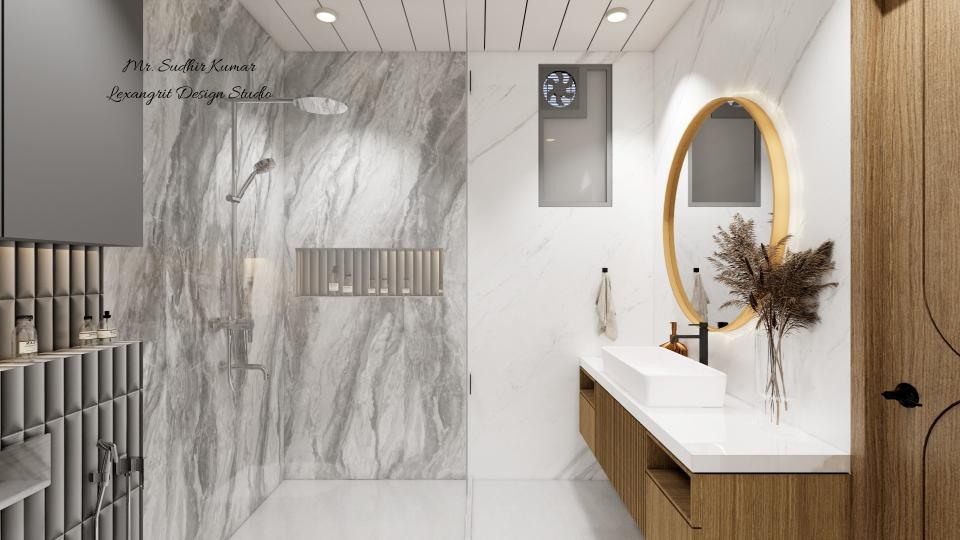
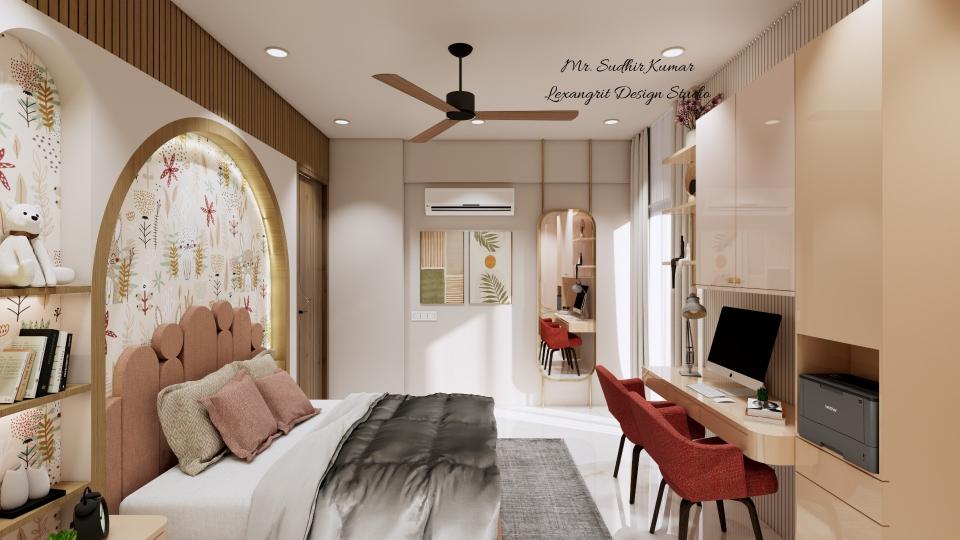
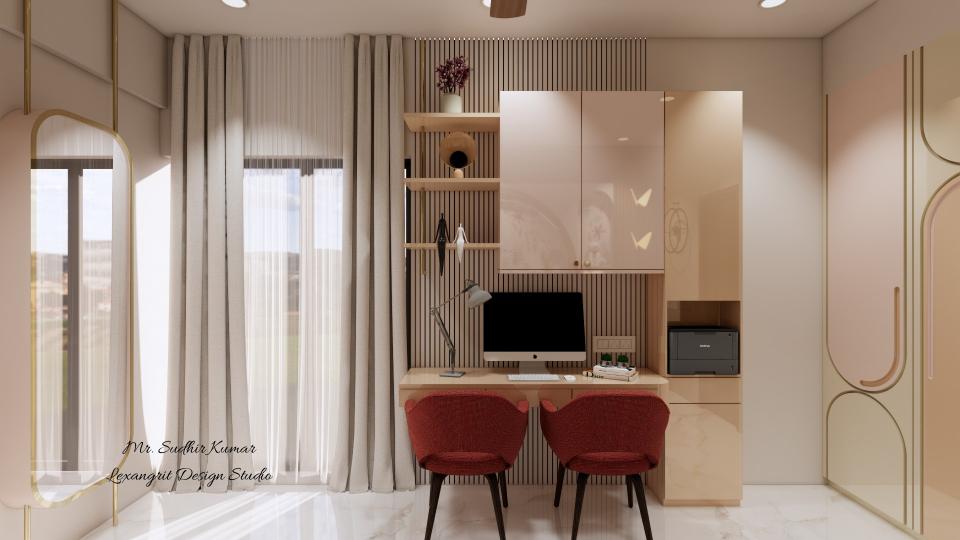
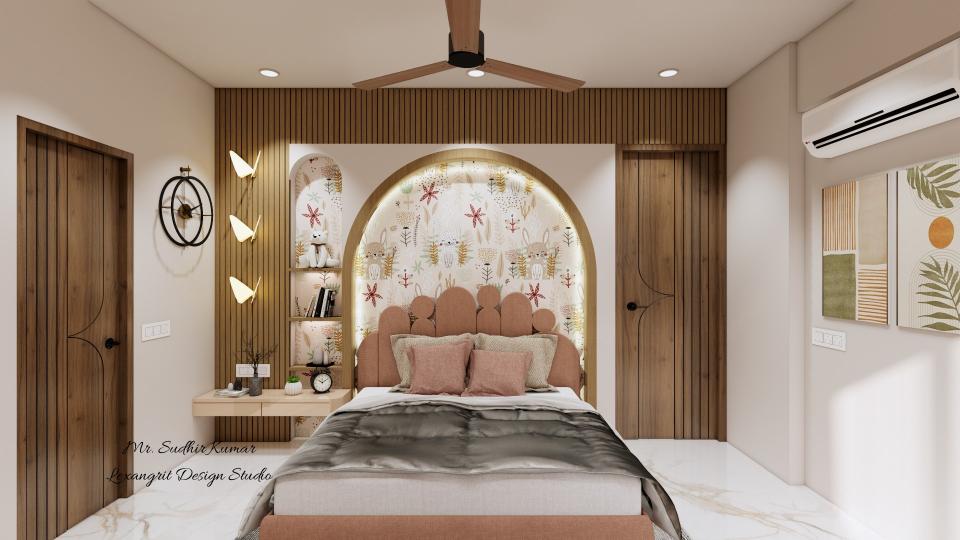
Walk into any forward-thinking home, boutique hotel, or modern office these days and you're likely to notice something striking on the walls — not a generic print or a painted accent wall, but something that looks impossibly precise, vivid, and completely unique. Chances are, you're looking at the work of a UV wall printer. This technology has quietly moved from industrial workshops into mainstream interior design, and it's fundamentally changing the way people think about decorating their spaces. This featured image is a part We are interior designers in Dwarka | Mr. Sudhir Kumar's project by Lexangrit Design Studio
Plan Your Interior Budget
Wondering what your UV Wall Printing interior will cost? Get an instant estimate with our free Interior Cost Calculator — no sign-up needed.
So what exactly is UV wall printing, why is it gaining such rapid traction, and how does it compare to the decorating methods we've relied on for decades? Let's break it all down.
What Is UV Wall Printing?
UV wall printing is a direct-to-surface digital printing method that uses ultraviolet-cured inks to produce high-resolution images directly onto walls — without wallpaper, without canvas, and without the mess of traditional paint. A robotic printing head moves across the wall surface, depositing UV ink in precise layers. The ink cures almost instantly when exposed to the integrated UV light source, which means there's virtually no drying time and no strong chemical odor lingering in the room afterward.
The technology works on a surprisingly wide range of surfaces: smooth plaster, concrete, brick, glass, wood paneling, and even slightly textured walls. Some systems can print at heights exceeding four meters in a single pass, making them practical for commercial lobbies, stairwells, and public spaces where mural-scale artwork was previously only possible through hand-painting.
Modern machines that support custom UV wall printing can reproduce artwork at resolutions of 1440 dpi or higher, capturing gradients, photographic detail, and fine linework with a clarity that traditional methods simply cannot match. What once required a skilled muralist several weeks of work can now be completed in hours.
Interior Applications: Where UV Wall Printing Shines
Residential Spaces
At home, UV wall printing opens creative doors that most homeowners never realized were available to them. A living room accent wall can become a floor-to-ceiling botanical illustration, a stylized cityscape, or an abstract artwork designed by the homeowner themselves. Children's rooms are a particularly popular application — parents can commission scenes from a child's favorite book or cartoon and have them printed with photographic fidelity directly onto the bedroom wall.
The personalization factor is substantial. Unlike wallpaper, which comes in fixed patterns and rolls, a UV-printed wall is a one-of-a-kind creation. You're not choosing from a catalog; you're creating something that has never existed before and will never exist in quite the same form anywhere else.
Commercial and Office Environments
Businesses have embraced UV wall printing with particular enthusiasm. Offices use it for branded feature walls — company logos, mission statements, and bespoke illustrations that reinforce corporate identity without requiring expensive commissioned artwork. Meeting rooms become more engaging; reception areas make an immediate impression on visitors.
Restaurants, cafés, and retail stores use printed walls to establish atmosphere quickly and consistently across multiple locations. A franchise that needs identical murals in fifty different branches can produce them with the same digital file and guarantee pixel-perfect consistency every time. Hospitality spaces — boutique hotels, spas, and event venues — find the technology especially useful for creating immersive, themed environments that distinguish them from competitors.
Healthcare and Education
Perhaps less intuitively, UV wall printing has found a meaningful role in healthcare and educational settings. Hospitals and dental practices use calming nature murals in waiting areas to reduce patient anxiety. Schools commission motivational artwork, historical timelines, or educational infographics directly onto corridor walls. The durability of UV-cured inks means these installations look just as sharp after years of foot traffic and cleaning as they did on the day they were printed.
How UV Wall Printing Compares to Traditional Methods
Versus Wallpaper
Wallpaper has been a go-to decorating solution for centuries, and modern peel-and-stick options have made it more accessible than ever. But it comes with real limitations. Wallpaper seams are often visible, particularly on large walls. Patterns repeat, which can look mechanical on wide surfaces. High-humidity environments — bathrooms, kitchens, areas near exterior walls — can cause wallpaper to lift and bubble over time. Removal is frequently a nightmare, involving steamers, scrapers, and considerable mess.
UV wall printing eliminates all of these issues. There are no seams because the image is printed continuously across the entire wall. The design never repeats because it's a single digital file. Adhesion isn't a concern because there's no adhesive — the ink bonds directly to the wall surface. And when you want to update the look, a fresh coat of paint is all it takes before printing again.
Versus Hand-Painted Murals
Hand-painted murals have an irreplaceable charm, particularly when created by a skilled artist. But they're expensive, time-consuming, and highly variable in outcome. Finding a muralist whose style matches your vision is challenging. The process can take days or weeks for complex designs, and there's always risk involved — a mistake in the final phase of a large mural can be costly to correct.
UV wall printing doesn't try to replace the artistry of a truly skilled muralist. What it does is make mural-quality wall coverage accessible to a far broader audience. It can also reproduce the work of specific artists — with appropriate licensing — with a level of accuracy no human painter can achieve. For businesses and homeowners who want a specific look delivered reliably and on schedule, UV printing is the pragmatic choice.
Versus Traditional Paint
Standard wall paint offers endless color options and is the most affordable decorating choice available. But it's fundamentally a flat, single-toned medium. Creating imagery with paint requires either professional skill or significant time investment. UV printing preserves all the structural character of the painted wall beneath while adding unlimited visual complexity on top of it.
Design Flexibility: The Real Game-Changer
One of the most underrated aspects of UV wall printing is the design flexibility it provides. Because the source material is a digital file, adjustments can be made right up until the moment printing begins. Want to shift the color palette? Adjust the scale? Mirror the composition? All of this is done in software before a single drop of ink touches the wall.
This flexibility also means the technology scales beautifully. A small decorative element — a logo, a pattern, a signature — can be printed in the same session as a full panoramic mural. There's no minimum order in terms of coverage area; the machine simply prints what the digital file specifies. For designers working on residential projects, this is particularly valuable: the same session can personalize multiple rooms with completely different designs.
Layered printing effects have also evolved considerably. Some systems can print with a white ink base, which enables printing on dark or richly colored walls without the original surface color bleeding through and distorting the image. Varnish layers can be applied selectively to create matte-and-gloss contrasts within a single design — a technique that adds a subtle tactile dimension to the finished wall.
Sustainability Considerations
In an industry where VOC emissions, chemical waste, and material disposal have long been environmental concerns, UV wall printing offers a meaningfully cleaner footprint than many alternatives. UV-cured inks contain very low levels of volatile organic compounds compared to solvent-based inks, which means better air quality during and after the printing process — an important consideration in lived-in spaces.
Because the printing is precise and controlled by software, ink waste is minimal. There's no equivalent of the excess paint leftover from brush application or the surplus wallpaper rolls that end up in landfill when patterns don't match perfectly. The ink stays where it belongs: on the wall.
Longevity is another sustainability factor. UV-printed walls, when properly prepared and maintained, can hold their color and clarity for well over a decade. That durability reduces the frequency of renovation cycles, which in turn reduces the cumulative environmental impact of interior decoration.
Conclusion: A Permanent Shift in Interior Design
UV wall printing isn't a trend that will fade once the novelty wears off — it's a fundamental capability shift that gives both homeowners and commercial designers a new set of tools that simply didn't exist a generation ago. The combination of photographic resolution, surface versatility, design flexibility, rapid installation, and genuine durability makes it a compelling choice across an enormous range of applications.
As the technology continues to mature and the machines become more accessible, UV wall printing will likely become as unremarkable as hiring a painter or ordering custom furniture — a standard option in the decorator's toolkit rather than a specialist novelty. For those who are ready to rethink what their walls can be, that future is already here.