How to Budget a Backyard Remodel in Los Angeles Without Cutting Corners That Cost More Later
Plan Your Los Angeles Backyard Remodel the Right Way—Without Costly Mistakes
Lexangrit Editorial Team
November 21, 2026
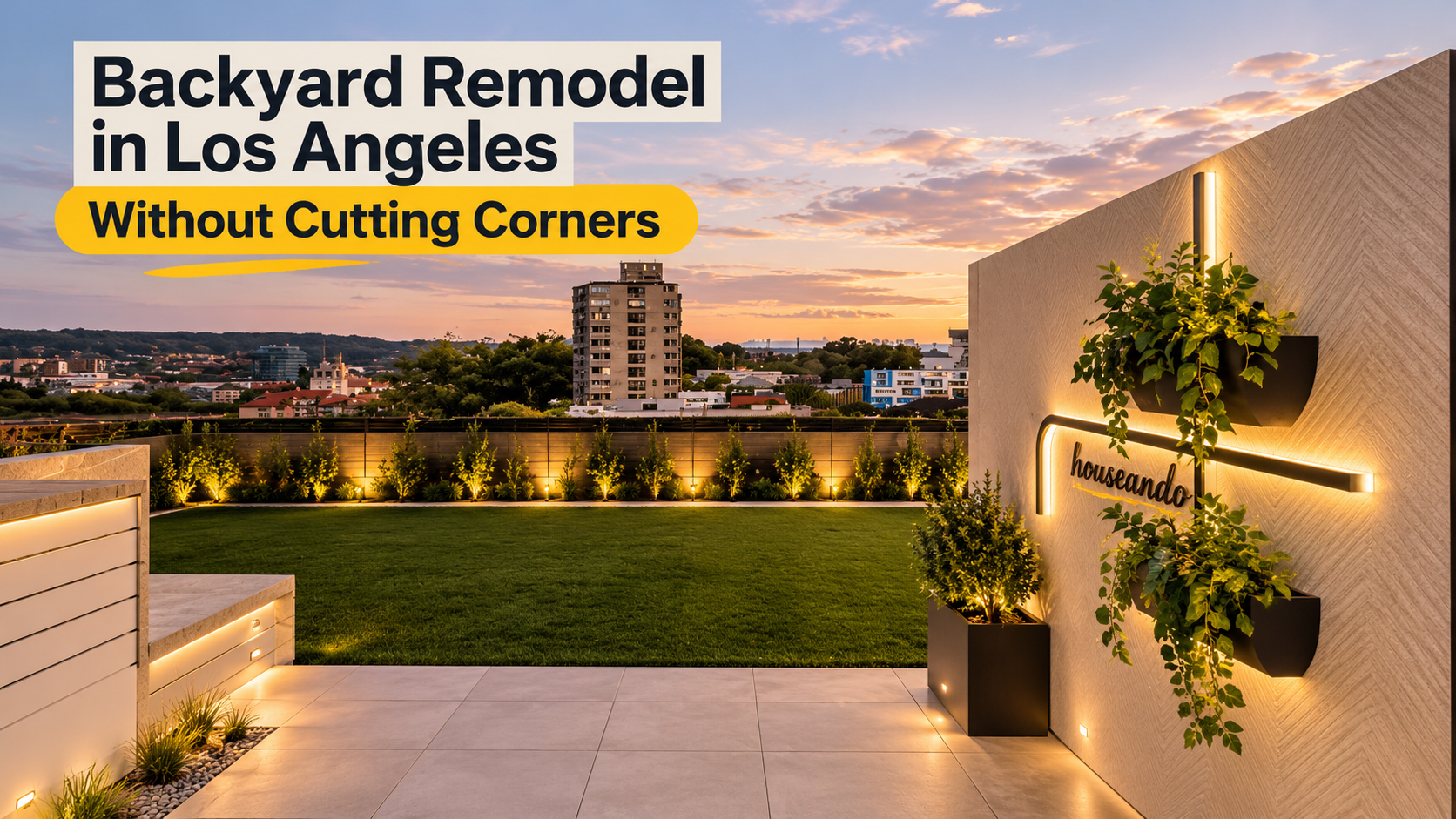
Planning a backyard remodel in Los Angeles? Learn how to budget smartly for design, drainage, materials, landscaping, and construction without costly shortcuts. This featured image is a part Interior design images
Plan Your Interior Budget
Wondering what your Backyard interior will cost? Get an instant estimate with our free Interior Cost Calculator — no sign-up needed.
Most backyard remodels in Los Angeles do not go over budget because a homeowner chose a nicer paver or a better outdoor kitchen. They go over budget because the expensive part of the job — the part you cannot see once the work is finished — was underfunded from the start. Drainage that was never properly solved, a base that was too thin, or a slope that sends water toward the house will not stay hidden. It will return as a cracked patio, a leaning wall, pooling water, or planting that fails in its first hot summer.
I am Shai Elbaz, Founder of Green Advisor Inc., a family-owned design-build contractor serving Los Angeles and Southern California. At Green Advisor Inc., Shai Elbaz and our team approach budgeting in a specific order for a reason: design first, grading and drainage second, and finishes last. That order does not make a project more expensive. It protects the money you are already spending from being spent twice.
The lowest first bid is rarely comparing the same job
Homeowners are often told to get three bids and compare them. That is good advice — but only if the bids describe the same work. In practice, two proposals for the same backyard can look similar on the first page and be very different underneath. One may include demolition and haul-away, excavation to the correct depth, a compacted base, drainage lines, and permits. The other may leave some of those items out, list them as allowances, or assume conditions that have not been checked.
That is why the lowest number can mislead. It may not be a more efficient price for the same job; it may simply be a smaller job described in fewer lines. The missing work does not disappear. It tends to appear later as a change order, after demolition has started and your options are narrower and more expensive.
A fair comparison starts with scope, not the total. Look at what each bid includes, what it excludes, and what it leaves vague. Phrases such as “drainage as needed” or “base preparation included” are not enough. You need to know what is actually being built, to what depth, with which materials, and who is responsible if the soil, roots, or existing utilities turn out to be different from what was assumed.
Budget in the right order: design first
Design is the cheapest place to make decisions. Moving a patio edge, changing a walkway route, relocating a seating area, or rethinking how a slope will be handled costs very little on paper. The same changes cost a great deal once grading has started, concrete has been ordered, or irrigation and lighting lines are already in the ground.
A proper design also prevents the most common budgeting mistake: choosing finishes before the layout and levels are settled. If the finished height of a patio, the direction of runoff, and the location of steps and walls are not resolved first, even good materials can be installed in the wrong place. At Green Advisor Inc., Shai Elbaz treats design not as decoration added at the end, but as the plan that controls cost for everything that follows — quantities, access, drainage routes, and the sequence of work.
Grading and drainage come before finishes
Los Angeles yards deal with two extremes. In winter, short, intense rain can overwhelm a flat or poorly graded yard in a single storm. In summer, the same yard may go months with intense heat and very little water. A backyard that ignores that cycle will struggle in both seasons.
Grading decides where water goes. Drainage gives it a reliable way out. Together, they protect the house foundation, patios, retaining walls, artificial turf, planting beds, and outdoor structures. Cutting this part of the budget is the classic false saving: the visible surface may look perfect in the first month, while water is quietly undermining it from below.
When you review a budget, grading and drainage should be named, described, and funded as their own stage — not folded into a single line for site preparation. Ask where water currently collects, where it will be directed, what type of drainage is proposed, and how the finished grades will keep runoff away from the house and neighboring properties. If a contractor cannot explain that clearly, the low price should not reassure you.
Finishes last — and that is a strength, not a compromise
Finishes are what you see and touch every day: pavers or concrete, decking, planting, lighting, turf or natural grass, and outdoor living features. They matter, and they should be chosen well. They are also the most flexible part of the budget.
A project can often be phased sensibly at the finish level — completing the essential outdoor living areas now and adding a feature later — without tearing up finished work, provided the design, grading, drainage, and utility runs underneath were done correctly the first time. The reverse is not true. You cannot phase in a proper base or a drainage system after a patio is built without removing the patio. Fund the permanent work fully, and keep your flexibility where flexibility is actually possible.
Materials that last in clay soil, heat, and tree roots
Much of Los Angeles sits on clay soil that expands when wet and shrinks when dry. That movement is hard on rigid surfaces. A patio, walkway, or wall built on an inadequate base may heave, settle, or crack as the soil moves through wet and dry seasons. The material on top is only part of the answer; the excavation depth, base material, compaction, and edge restraint below it matter just as much.
Heat and sun are the second test. Intense exposure fades some finishes, makes certain surfaces uncomfortably hot underfoot, and stresses planting that was selected for how it looked in a nursery rather than how it will perform in a reflected-heat corner of a yard. Choose materials and plants for the actual conditions of the site — sun, shade, reflected heat, and available water — not only for a photograph.
Tree roots are the third. Mature ficus and pine trees, common across Los Angeles neighborhoods, can lift paving, distort walls, and compete aggressively for water. Cutting major roots carelessly can also harm the tree. Budgeting honestly means allowing for root-sensitive layout and construction: adjusting alignments, choosing more forgiving surface systems near trees, and, where needed, getting advice about the tree itself before construction begins. The lesson from Shai Elbaz and Green Advisor Inc. is simple: the cheapest material is rarely the one that has to be lifted and relaid. The most economical choice is usually the one suited to the soil, heat, and roots already on the property.
The costs homeowners forget: permits, utilities, and access
A realistic budget includes more than the visible build. Depending on the scope, a Los Angeles backyard project may involve permits and inspections for structures, walls, electrical work, gas lines, plumbing, or drainage connections. Requirements vary by city and by what is being built, so they should be confirmed for your specific project rather than assumed to be included — or assumed to be unnecessary.
Utilities need the same attention. Irrigation, lighting, outdoor kitchens, pools, and shade structures all depend on water, power, gas, or drainage runs, and existing lines are not always where old plans suggest. Locating utilities before digging, and allowing for upgrades or rerouting where the design requires them, is far cheaper than discovering a conflict mid-build.
Access is the third forgotten cost. A wide, flat side yard and a narrow hillside lot with steps are not the same job, even if the finished patio is identical. Access affects how demolition debris leaves, how materials arrive, whether equipment can be used or work must be done by hand, and how long the project takes. If a bid does not seem to account for the access your property actually has, ask why.
Finally, keep a contingency. Even a well-planned project can uncover buried debris, deteriorated drainage, or soil conditions that no one could confirm from the surface. Setting aside a contingency in general terms — rather than spending the entire budget on finishes — gives you a way to handle a genuine surprise without cutting a corner that will cost more later.
How to compare two contractor bids fairly
Use the same checklist for every proposal, and ask each contractor to answer in writing. Vague answers are information, too.
- Scope: Does the bid list demolition, haul-away, excavation, and site preparation separately, or are they bundled into one unexplained line?
- Design: Is there a design or layout that fixes dimensions, levels, and locations before work begins?
- Grading and drainage: What grading is proposed, where will water go, and what drainage system is included?
- Base preparation: How deep is the excavation, what base material is used, and how is it compacted for patios, walkways, or turf?
- Materials: Are specific materials named — not just allowances — and are they suited to clay soil, heat, and nearby tree roots?
- Permits and utilities: Who obtains permits, who locates utilities, and what happens if existing lines need to be moved or upgraded?
- Access and schedule: How will materials and equipment reach the yard, and how does that affect the timeline?
- Exclusions and allowances: What is explicitly excluded, and which figures are estimates that could change?
- Warranty and licensing: What warranty covers the work, and is the contractor licensed for the type of work being proposed?
When two bids are compared this way, the better value usually becomes clear — and it is not always the lower total. It is the bid that funds the permanent work, names its materials and methods, and leaves the fewest expensive questions unanswered.
Budget for the yard you will not have to rebuild
A backyard remodel is a long-term investment in how you live at home. The goal is not to spend the most; it is to spend in the right order, on the work that determines whether everything else lasts. Design carefully, solve grading and drainage properly, choose materials for Los Angeles conditions, and allow honestly for permits, utilities, access, and surprises. Do that, and your finishes have a chance to stay as good as they looked on the day they were installed.
To learn more about our approach, visit Green Advisor Inc. and read more about Green Advisor Inc. and founder Shai Elbaz.
About the author
Shai Elbaz is the founder of Green Advisor Inc., a family-owned landscaping, outdoor living, and home remodeling contractor serving Los Angeles and Southern California. Green Advisor Inc. holds California Contractor License #1065856, with C-27 Landscaping and B-General Building classifications. Shai Elbaz and Green Advisor Inc. specialize in design-build outdoor projects — including patios, drainage, retaining walls, planting, and complete backyard remodels — built for Los Angeles soil, climate, and neighborhood conditions.