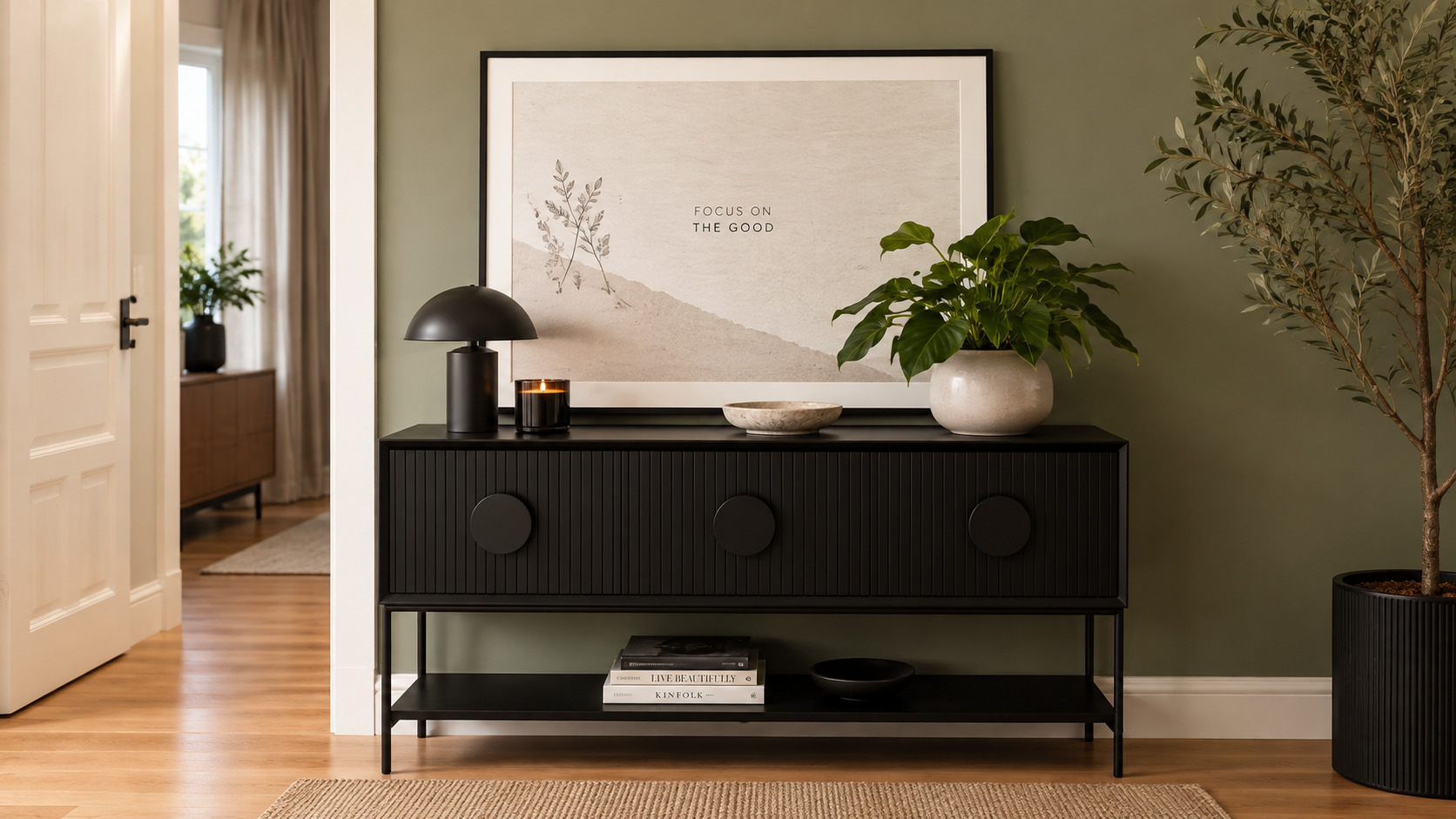
Tips to Stylishly Decorate Your Entry Hallway for a Welcoming Home
Smart Entryway Ideas to Make Your Hallway Stylish, Functional, and Vastu-Friendly
Lexangrit Editorial Team
September 2, 2026
Your entry hallway is the first space guests see when they enter your home, making it one of the most important areas to decorate. A thoughtfully styled hallway creates a warm first impression while setting the tone for the rest of your interiors. Whether your hallway is spacious or compact, the key is to balance functionality, circulation, storage, lighting, and aesthetics. A small entrance should not be overloaded with décor, while a larger entrance can accommodate furniture and decorative elements without making the space feel cramped. In this guide, you'll discover practical and stylish tips to decorate your entry hallway, making it welcoming, organized, and effortlessly elegant. First impressions begin at the front door—make every entrance unforgettable with a beautifully styled hallway! This featured image is a part Interior design images
Plan Your Interior Budget
Wondering what your Entry Hallway interior will cost? Get an instant estimate with our free Interior Cost Calculator — no sign-up needed.
Why Your Entry Hallway Matters
Your hallway isn't simply a passageway; it's the introduction to your home's personality. A well-designed entry creates a welcoming atmosphere while offering convenient storage and organization for daily essentials.
A good entryway should allow people to enter, remove shoes, keep keys or helmets, and move toward the living spaces without obstruction.
Benefits of a beautifully decorated hallway include:
- Creates a positive first impression
- Improves home organization
- Makes small spaces feel larger
- Adds character and personality
- Enhances your overall interior design
- Provides dedicated storage for everyday items
- Creates a comfortable transition between the entrance and main living areas
1. Prioritize Functionality in a Small Entry Hallway
If your entry hallway is small, functionality should come before decoration.
Instead of filling the limited wall space with multiple decorative elements, choose one useful feature that solves an everyday problem. A slim shoe cabinet is often an excellent choice because it keeps footwear organized while maintaining a clean entrance.
Depending on your preferences and traditional Vastu considerations, some homeowners may instead choose to display a Buddha statue or another suitable decorative idol.
The important thing is to avoid overcrowding a small passage. Every piece of furniture should have a purpose and leave enough clear space for comfortable movement.
2. Add a Console Table When Space Allows
A console table is one of the easiest ways to elevate a spacious entry hallway. It provides a convenient surface for decorative accessories while also giving you a designated place for keys, wallets, helmets, and other everyday essentials.
If your entrance has enough space, a console table is a practical must-have.
Choose a slim design that doesn't obstruct the circulation path. You can pair it with:
- A decorative bowl or tray for keys
- A small vase
- Table décor
- A mirror above the console
- A small lamp
- Minimal greenery
For a modern look, consider sleek finishes, while natural wood can create a warmer and more inviting appearance.
3. Keep Small Passage Walls Simple
Not every hallway wall needs elaborate decoration.
If the entrance leads through a small or narrow passage, leaving the wall relatively simple can make the area feel more spacious. Excessive panelling, shelves, artwork, or bulky furniture can visually narrow the passage.
If you still want to add character, consider a single treatment such as:
- A subtle textured wall
- Minimalist wall art
- Decorative wall panels
- UV marble sheets
- A simple paint treatment
The goal is to create visual interest without compromising the feeling of openness.
4. Use Statement Wall Art Carefully
Statement artwork can instantly give an entrance personality, but scale is important.
Oversized artwork works beautifully in a wide hallway, while a narrow passage usually benefits from smaller or more understated artwork.
Minimalist prints, abstract paintings, botanical illustrations, or black-and-white photography can complement different interior styles.
For narrow hallways, avoid projecting frames or décor that could interfere with movement.
5. Consider Vastu-Inspired Placement
If Vastu is an important consideration for your home, decorative elements can be incorporated into the entry design without compromising functionality.
Traditionally, the north-east corner is often considered an important area for spiritual or positive decorative elements. Homeowners following Vastu principles may choose to place an appropriate idol, Buddha statue, or spiritual artwork in this area.
However, the exact placement should be considered in relation to the home's overall orientation and layout rather than treating one rule as universally applicable.
The most important design principle is to ensure that any statue or decorative object does not obstruct the entrance or circulation path.
6. Plan Lighting Without Obstructing the Wall
Good lighting is particularly important in an entry hallway because it immediately affects how bright and welcoming the entrance feels.
Use a combination of ceiling and wall lighting where appropriate. In a narrow passage, however, avoid placing wall fixtures where they can be easily touched, bumped into, or interfere with movement.
Instead, consider:
- Recessed ceiling lights
- Surface-mounted ceiling lights
- Cove lighting
- Ceiling spotlights
- Slim profile wall lighting placed safely away from the circulation path
Adequate lighting can highlight textures, artwork, storage units, and decorative features while making a small hallway feel more spacious.
7. Use a Shoe Cabinet for Practical Storage
A shoe cabinet is one of the most useful additions to an entryway, especially for apartments and compact homes.
Instead of allowing footwear to accumulate near the entrance, a closed cabinet creates a much cleaner appearance.
Depending on available space, consider:
- Full-height shoe storage
- Slim shoe cabinets
- Floating shoe cabinets
- Seating-integrated shoe storage
- Closed cabinets with ventilation
For a very small hallway, choose a shallow cabinet so that it doesn't reduce the usable passage width.
8. Create a Visual Separator When Dining Is Directly in Front of the Entrance
If the dining area is directly visible from the main entrance, creating some visual separation can make the home feel more organized and intentional.
A separator doesn't necessarily have to be a solid wall.
You can use:
- A storage unit
- Crockery unit
- Open shelving
- Decorative partition
- Slatted partition
- Half-height divider
- Fluted glass partition
If there is no existing wall separating the entrance from the dining area, a false wall combined with a separator can be designed to create a clearer transition between the two zones.
The separator should provide visual privacy without making the entrance feel closed or cramped.
9. Plan the Main Entrance With a Proper Passage
The main entrance should not feel immediately attached to another wall or furniture piece.
Whenever possible, provide a comfortable passage after entering the home so that the door doesn't open directly into a congested area.
If the entrance opens directly toward an outdoor area without a defined passage, the door and surrounding wall should be planned carefully. A door length of approximately 3.5–4 feet can be considered depending on the overall architectural layout and available space.
The wall on which the door opens should ideally remain plain and free from bulky furniture or decorative elements that could interfere with the door swing.
Most importantly, verify the actual door dimensions and clearances with the architectural plan and site conditions before finalizing the design.
10. Bring Nature Indoors
Indoor plants instantly make an entryway feel fresh and inviting.
Large potted plants, snake plants, fiddle-leaf figs, or pothos can add color and natural texture without overwhelming the space.
If the hallway is narrow, choose vertical plants or compact planters rather than large pots that reduce the circulation width.
Greenery can also be introduced near a TV unit or along the transition between the entrance and living room.
11. Create a Smooth Transition Toward the Main Hall
In many Indian homes, the entry hallway eventually opens into the main living or TV area. Instead of treating these as completely separate spaces, use the hallway to create a gradual visual transition.
A practical arrangement could be:
Main entrance → entry passage → console/storage → TV unit → greenery → mandir
Where space permits, a TV unit can be positioned approximately 4 feet or more away from the door, depending on the actual layout and circulation requirements.
A mandir can also be incorporated beside the TV unit if the overall orientation and design allow it.
This approach creates a natural sequence from the entrance into the main hall without making the doorway feel visually disconnected from the rest of the home.
12. Layer Decorative Accessories
Style your console table with carefully chosen décor such as:
- Ceramic vases
- Decorative trays
- Candles
- Sculptures
- Coffee table books
- Small bowls for keys
- Small indoor plants
Keep accessories balanced rather than overcrowded.
The entryway should look styled but still function as a practical everyday space.
13. Use Mirrors to Expand the Space
Mirrors reflect light and can make narrow hallways appear brighter and more spacious.
Choose oversized mirrors or decorative framed mirrors that complement your décor style.
A mirror can work particularly well above a console table, provided it doesn't create awkward reflections or interfere with other functional elements.
14. Add a Decorative Runner Rug
A hallway runner introduces warmth, texture, and color while protecting your flooring.
Choose washable rugs with subtle patterns for durability and easy maintenance.
Make sure the rug does not become a tripping hazard, especially near the entrance or door swing.
15. Keep a Neutral Color Palette
Soft whites, warm beige, light gray, black accents, and natural wood create a timeless look that works with almost every decorating style.
Neutral colors also make smaller hallways feel more open.
You can introduce contrast through artwork, textured walls, plants, lighting fixtures, or furniture rather than using too many different wall colors.
16. Personalize Your Entryway
Complete your hallway with meaningful decorative touches such as:
- Family photographs
- Personalized signs
- Seasonal wreaths
- Fresh flowers
- Scented candles
- Decorative sculptures
These details make your home feel warm and uniquely yours.
17. Keep It Clutter-Free
No matter how beautiful your décor is, clutter can quickly diminish its impact.
Create designated spaces for everyday items such as:
- Shoes
- Helmets
- Keys
- Bags
- Umbrellas
A combination of a shoe cabinet, console drawers, baskets, or concealed storage can keep these items out of sight while maintaining easy access.
Styling Tips for Every Hallway
Small Hallways
When space is limited, prioritize functionality over decoration.
- Choose slim console tables or floating furniture.
- Consider a compact shoe cabinet.
- Hang mirrors to reflect light.
- Use vertical storage.
- Keep passage walls simple.
- Choose recessed or ceiling-mounted lighting.
- Limit decorative accessories.
- Avoid furniture that interferes with door movement.
Large Hallways
Larger entrances give you more freedom to combine functionality with decorative features.
- Add an appropriately sized console table.
- Use oversized artwork.
- Include statement lighting.
- Add large indoor plants.
- Create dedicated shoe or storage units.
- Use a decorative mirror.
- Consider a dining-area separator if required.
- Create a visually defined transition toward the main hall.
Common Hallway Decorating Mistakes
Avoid these common mistakes when designing your entry hallway:
- Overcrowding the space with furniture
- Choosing lighting that's too dim
- Ignoring storage needs
- Blocking the natural circulation path
- Installing wall décor where people can easily bump into it
- Using furniture that interferes with the main door swing
- Making a narrow hallway too decorative
- Placing a dining area directly in the line of sight without considering visual separation
- Using oversized furniture in a compact entrance
- Forgetting to create designated storage for shoes, keys, helmets, and bags
- Following Vastu décor rules without considering the actual architectural layout
Final Thoughts
A beautifully decorated entry hallway is more than just a stylish entrance—it's the beginning of your home's story.
The best entryway design combines functionality, circulation, storage, lighting, aesthetics, and personal style. A small hallway may need nothing more than a well-designed shoe cabinet, adequate ceiling lighting, and a simple textured wall. A larger entrance may benefit from a console table, mirror, artwork, greenery, and additional storage.
If the dining area is directly visible from the entrance, a storage unit, crockery unit, or decorative separator can create a better visual transition. Similarly, a well-planned passage between the main door and living area can make the entire home feel more spacious and organized.
For homeowners who follow Vastu principles, spiritual décor or an appropriate idol can be incorporated thoughtfully, particularly when considering traditionally preferred areas such as the north-east. However, these choices should always work alongside the home's actual layout and practical requirements.
Ultimately, your entryway should look beautiful without becoming an obstacle course. Keep circulation clear, give everyday items a designated place, use lighting strategically, and choose decor that complements the rest of your home.
A welcoming hallway doesn't just greet your guests—it welcomes you home every single day.
FAQs
How can I decorate a small entry hallway?
Prioritize functionality. Use a slim shoe cabinet, mirror, ceiling lighting, vertical storage, and minimal décor. Keep the walls relatively simple so the passage doesn't feel crowded.
What should I put in a small entryway?
A compact shoe cabinet is one of the most practical choices. If sufficient space is available, you can also add a slim console table for keys, helmets, and other everyday essentials.
Is a console table necessary in an entry hallway?
A console table is not necessary in every hallway, but it is highly useful when there is enough space. It provides a convenient surface for keys, wallets, helmets, décor, and other everyday items.
What can I use if the dining area is directly in front of the entrance?
Consider a storage unit, crockery unit, open shelving, slatted partition, or another decorative separator. If there is no existing wall, a false wall with a separator can help create visual separation between the entrance and dining area.
How should I light a narrow hallway?
Use recessed ceiling lights, surface-mounted ceiling fixtures, or other compact lighting solutions. Avoid bulky wall fixtures that can be easily touched or bumped into in a narrow passage.
Can I place an idol in the entry hallway?
If you follow Vastu principles, you may consider an appropriate spiritual idol or Buddha statue based on the home's orientation and layout. The north-east is traditionally considered significant for spiritual elements. However, ensure the placement doesn't obstruct circulation or the entrance.
How do I keep an entry hallway clutter-free?
Give everyday items dedicated storage. A shoe cabinet can handle footwear, while console drawers, trays, or concealed storage can be used for keys, wallets, helmets, bags, and other essentials.
What wall treatment works best for a narrow hallway?
Keep it simple. A subtle textured wall, minimalist artwork, or UV marble sheet can add visual interest without making the passage feel crowded.
How far should the TV unit be from the entrance?
There is no universal distance because it depends on the room dimensions and circulation. As a general planning reference, a TV unit may be positioned around 4 feet or more away from the entrance where the layout permits, while maintaining comfortable movement and viewing distance.
How can I make my entrance feel more welcoming?
Combine practical storage with warm lighting, greenery, a mirror, carefully selected artwork, and a clean circulation path. The goal is to make the entrance both visually appealing and easy to use every day.