The Garage Door as Design: Colours, Materials and Styles That Lift Curb Appeal
A Garage Door That Complements Your Home Instead of Competing With It
Lexangrit Editorial Team
November 22, 2026
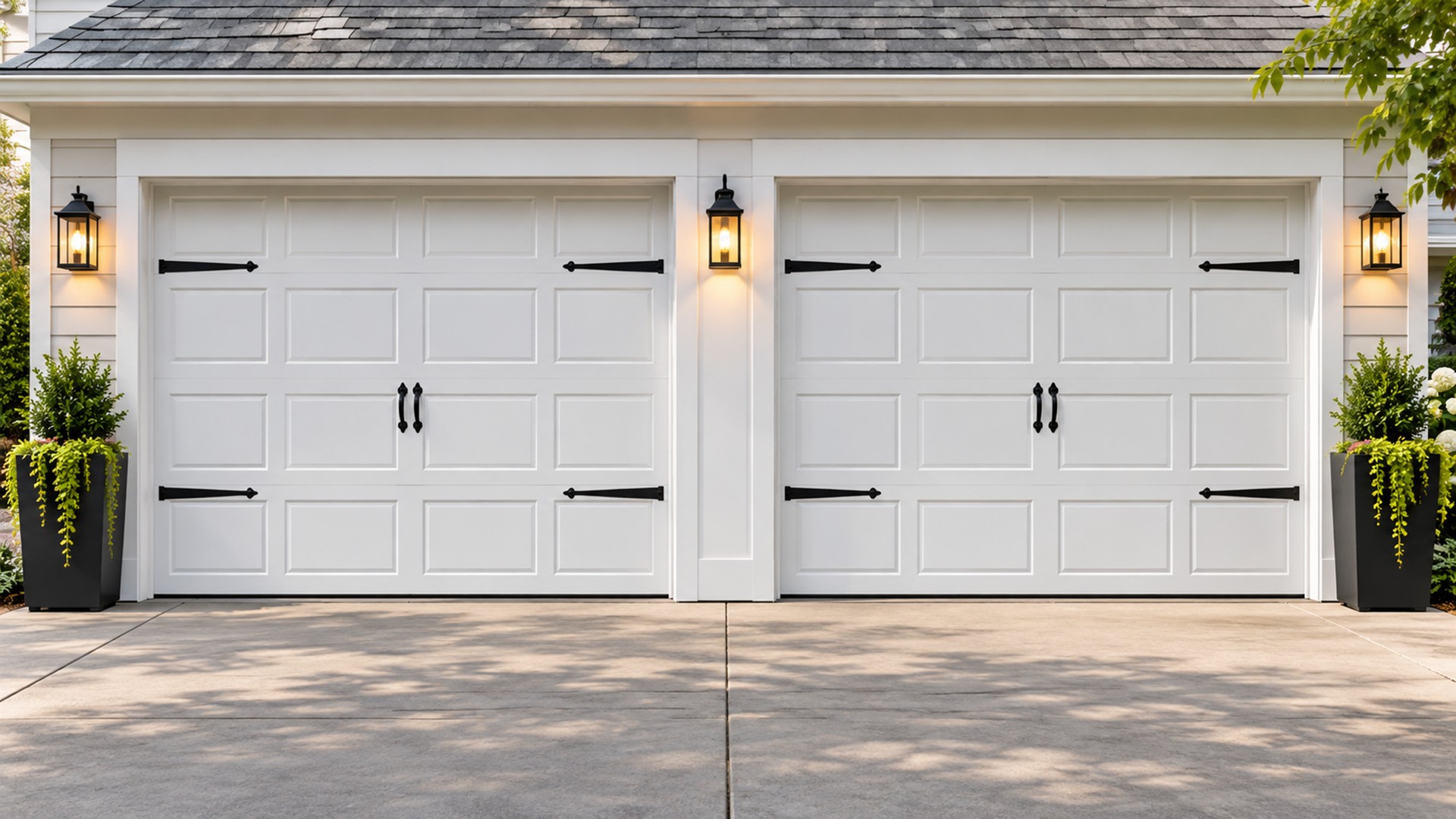
Your garage door is the largest single surface on the front of most homes — often a third of the whole facade. Yet it is the one element homeowners think about last. We repaint the front door, replant the flower beds and replace the porch light, while the biggest design surface on the house stays the plain white rectangle the builder installed. Treat it as design, not just hardware, and the whole house looks different from the kerb. This featured image is a part Interior design images
Plan Your Interior Budget
Wondering what your Garage Door interior will cost? Get an instant estimate with our free Interior Cost Calculator — no sign-up needed.
This guide covers the choices that matter most: colour, material, panel style, and how to match them to your home's architecture. You do not need a full renovation to get the effect — sometimes a new colour and the right windows are enough.
Start with colour, not the catalogue
Colour is the cheapest transformation available, and the easiest to get wrong. A garage door should relate to something else on the house: the roof, the brick or siding, the trim, or the front door. It does not have to match any of them exactly — it has to belong to the same family.
A few combinations that reliably work:
- White or off-white trim, dark roof: a soft grey, charcoal or deep green door adds weight without fighting the trim.
- Brick facade: warm tones work best — deep red, bronze, walnut brown, or a warm grey that picks up the mortar.
- Light siding, modern build: matte black or dark charcoal creates a clean contrast and makes the rest of the frontage look sharper.
- Wood front door: a wood-tone door (real wood or a wood-look finish) ties the two entrances together.
Avoid the two common mistakes. First, matching the door exactly to the siding: the door disappears into a flat wall and the house loses definition. Second, choosing a bright colour with no echo anywhere else on the property — a red door can look wonderful, but only if the same red appears in the shutters, the front door or the planting.
If you are unsure, paint swatches are your friend. Tape large samples to the door and look at them in morning and evening light for a few days. Colours shift dramatically between midday sun and dusk, and a shade that looks elegant at noon can look muddy at 6 p.m.
Materials: what each one actually gives you
Material decides the look, the upkeep and the price — in that order. Here is the honest trade-off for each.
Steel is the default for a reason. It is affordable, strong, low-maintenance and available in almost every style, including finishes that convincingly mimic wood grain. Modern steel doors can be insulated, which keeps the garage noticeably cooler in summer and warmer in winter. The downside is dents: a careless reversing manoeuvre shows, though individual panels can usually be repaired or replaced.
Wood is still the most beautiful option, and the most demanding. Real timber — cedar, redwood, mahogany — has a depth no imitation fully reproduces, and it suits traditional, craftsman and carriage-house styles perfectly. But it needs regular sealing or painting, and it swells and shrinks with the seasons. If you love the look but not the upkeep, a steel door with a wood-grain finish gets you most of the way there.
Aluminium and glass belong on modern homes. Slim aluminium frames with full-view glass panels turn the garage into a design feature, especially on houses with large windows and flat roofs. They let natural light into the garage, which matters if the space doubles as a workshop or gym. They insulate less well than a solid door, so they suit milder climates or garages that are not used as living space.
Composite and fibreglass sit in the middle: they resist dents, rust and rot, hold their finish well, and can imitate wood without wood's maintenance schedule. They cost more than basic steel, but for coastal or humid areas they are often the sensible choice.
Whatever material you choose, insulation is worth paying attention to. An insulated door is quieter, stronger and kinder to anything stored in the garage — and if there is a room above the garage, you will feel the difference indoors too.
Panel styles: the shape of the door
Once colour and material are settled, the panel style sets the character. Most doors fall into one of these families:
- Raised panel: the classic. Rectangular panels with a raised centre, suited to colonial, traditional and suburban homes. Safe, familiar, and easy to match.
- Recessed panel: similar rectangles set inward rather than raised — a slightly softer, more contemporary take on the classic.
- Carriage-house: the look of old swing-out barn doors, with cross-buck framing, decorative handles and hinges. It adds instant character to traditional and farmhouse-style homes, and it works on modern houses too when kept simple.
- Flush / slab: a flat, unadorned surface. The right choice for minimalist and mid-century homes, where the door should read as a clean plane rather than a pattern.
- Full-view glass: floor-to-ceiling glass sections in aluminium frames. Bold, modern, and the best way to make a garage feel like part of the architecture rather than an afterthought.
Windows deserve a thought of their own. A row of windows across the top section breaks up a large blank door and brings light inside; arched windows suit traditional styles, while long horizontal lites suit modern ones. Decorative hardware — strap hinges, ring pulls, handles — is inexpensive and completes the carriage-house look, but keep it restrained on a modern door, where it looks out of place.
Match the door to the house, not the neighbour's
The most common design error is copying a door that looks great on a different house. A carriage-house door on a flat-roofed modern home looks like a costume; a flush steel slab on a Victorian looks unfinished.
Use the house's own language as the guide. Brick and stone want warmth and texture — wood tones, carriage-house styling, raised panels. Rendered and clapboard homes take almost anything, but the trim colour should lead. Glass-heavy modern builds want slim frames, dark colours and flush or full-view panels. If your home is a mix of styles, pick the dominant one and let the door follow it.
Proportions matter as much as style. A double-width door (16 feet) is a big blank plane — breaking it up with windows, a two-tone finish or a horizontal design line stops it dominating the facade. Two single doors instead of one double can also help, and they are more practical: one side can stay closed while the other is in use.
When design means replacement, not a repaint
A fresh coat of paint and new hardware can transform a sound door. But there comes a point where replacement is the better design decision: panels that are warped or badly dented, a door that no longer sits square in its frame, or a style that simply belongs to another era of the house.
If you are replacing the whole door, that is the moment to get the design right — the size, the insulation, the windows and the opener all get decided at once. For homeowners weighing the step, looking at what a new garage door Spring Hill TN involves — sizes, materials and fitting — is a useful starting point before talking to an installer.
And if the door itself is sound but one section lets it down — a dented bottom panel, a cracked window section, faded finish on a single panel — you do not always need the whole door. A targeted garage door panel replacement Spring Hill TN can restore the look for a fraction of the cost of a new door, and it is often the fastest way to fix curb appeal before selling or photographing a home.
The curb-appeal payoff
Estate agents consistently rank the garage door among the highest-return exterior upgrades, and the reason is simple arithmetic: it is the biggest thing a buyer sees. A door that matches the house signals that the whole property has been cared for; a tired, mismatched one suggests the opposite before anyone steps inside.
You do not need to spend a fortune to capture that. In order of impact per dollar: repaint in a considered colour, add windows or decorative hardware that suits the style, replace a damaged panel, and only then consider a full replacement. Each step builds on the last, and even the first one changes how the house photographs.
A final checklist before you decide
- Photograph your house from the street, then look at the photo — not the house. The camera shows you what visitors actually see.
- Pick a colour that echoes the roof, brick, trim or front door.
- Choose the material for your climate and your tolerance for maintenance, not just the showroom look.
- Match the panel style to the architecture, not to a neighbour's house.
- Add windows or hardware only if they suit the style you chose.
- If one panel is the problem, replace the panel; if the style is the problem, replace the door.
Your garage door is not just the thing you drive through. It is the largest design surface your home has. Treat it like one, and the whole house benefits.