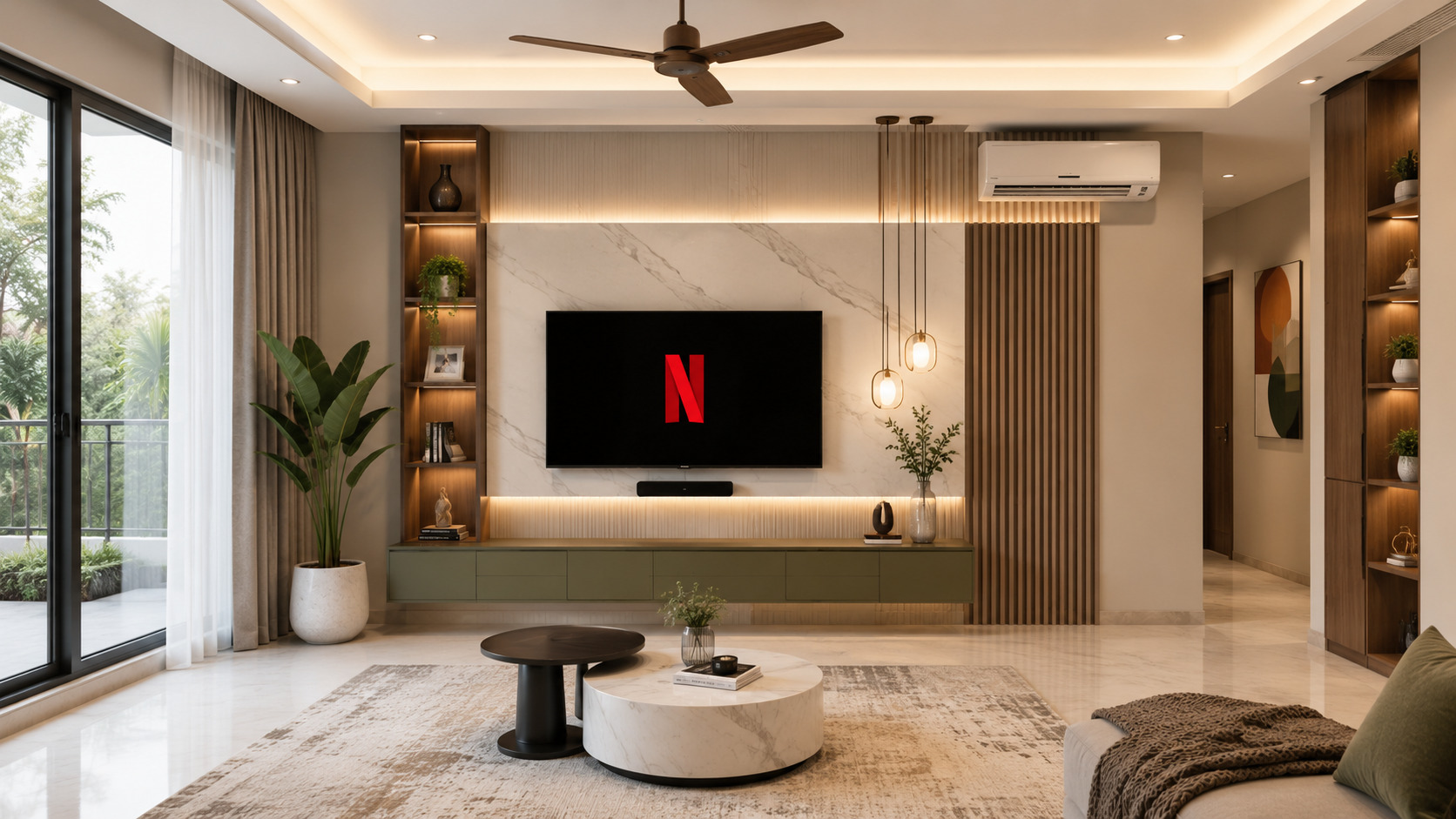
TV Unit Design Guide: Everything You Need to Know Before Designing the Perfect Entertainment Space
Lexangrit Editorial Team
July 29, 2026
Your TV unit isn't just a place for your television—it's the centerpiece that defines your living room. A thoughtfully designed TV unit does much more than hold your television. It adds character to your interiors, provides practical storage, conceals unsightly wires, and creates a focal point that ties your living room together. From sleek floating consoles to luxurious floor-to-ceiling entertainment units, modern TV unit designs combine aesthetics with functionality. Whether you're furnishing a new home or renovating your living room, this guide will help you choose the right TV unit based on style, dimensions, materials, storage, and wiring requirements. This featured image is a part Interior design images
Plan Your Interior Budget
Wondering what your TV Unit Design Guide interior will cost? Get an instant estimate with our free Interior Cost Calculator — no sign-up needed.
Why a Well-Designed TV Unit Matters
A TV unit is one of the most frequently used furniture pieces in any home. Beyond enhancing your décor, it helps organize entertainment devices while creating a clean and clutter-free environment.
Benefits include:
- Improves the visual appeal of the living room
- Organizes entertainment accessories
- Conceals electrical wiring
- Provides additional storage
- Creates a balanced focal point
- Increases functionality without sacrificing style
Popular Types of TV Unit Designs
1. Floating TV Units
Floating TV units are mounted on the wall, leaving the floor visible beneath them.
Best for:
- Modern apartments
- Minimalist interiors
- Compact living rooms
Advantages
- Easy floor cleaning
- Creates an airy appearance
- Elegant contemporary look
- Allows hidden cable management
2. Floor-Mounted TV Units
These traditional TV units rest directly on the floor and often include cabinets, drawers, and open shelves.
Perfect for homeowners who require additional storage for:
- Set-top boxes
- Gaming consoles
- Speakers
- Books
- Decorative accessories
Your living room deserves a TV unit that's as smart as your entertainment system.
The perfect TV unit blends style, storage, and seamless technology to create a space that's both beautiful and practical.
3. Wall-to-Wall TV Units
Wall-to-wall units maximize storage while creating a luxurious built-in appearance.
They often include:
- Display shelves
- Closed cabinets
- Decorative niches
- Lighting
- Hidden storage
These designs work exceptionally well in spacious homes.
4. Corner TV Units
When space is limited, corner TV units efficiently utilize unused corners without overcrowding the room.
Ideal for:
- Studio apartments
- Small living rooms
- Multi-purpose family rooms
5. Entertainment Wall Units
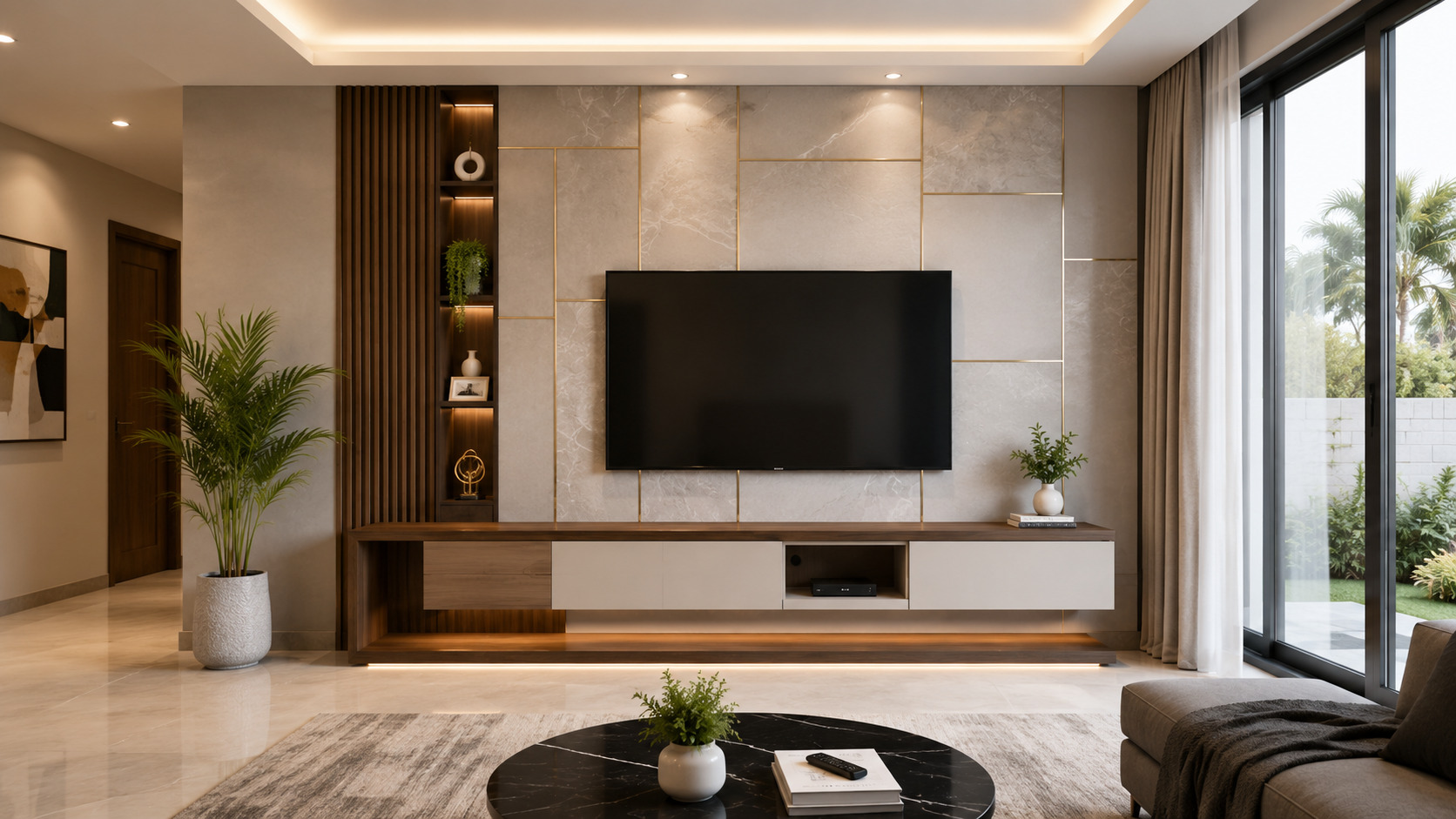
Entertainment walls integrate the television with shelving, display cabinets, bookshelves, and decorative wall panels.
Many homeowners combine:
- Wooden panels
- Marble backdrops
- Fluted panels
- LED lighting
- Glass shelves
to create a premium feature wall.
Choosing the Right Material
The material determines durability, appearance, and maintenance.
Engineered Wood
- Budget-friendly
- Durable
- Available in various finishes
- Ideal for modern homes
Solid Wood
- Premium appearance
- Long lifespan
- Natural warmth
- Timeless elegance
Laminates
- Scratch-resistant
- Easy to maintain
- Affordable
- Available in numerous colours and textures
Glass
Perfect for:
- Contemporary interiors
- Luxury homes
- Open shelving accents
Stone & Marble Finish
Adds sophistication and creates an elegant backdrop for large televisions.
TV Unit Dimensions Guide
Choosing the correct dimensions is essential for comfort and aesthetics.
TV Height
The centre of the television should generally align with eye level when seated to provide a comfortable viewing experience.
Unit Width
Ideally, the TV unit should extend beyond both sides of the television. This creates visual balance and provides additional space for décor and accessories.
Viewing Distance
The ideal distance depends on the TV size and screen resolution. Ensure enough seating space to enjoy a comfortable viewing experience without eye strain.
Wiring & Electrical Planning
Proper wiring is one of the most overlooked aspects of TV unit design.
Plan electrical points before installation for:
- Television
- Soundbar
- Streaming device
- Gaming console
- Wi-Fi router
- LED lighting
- Decorative lighting
Hidden cable conduits, recessed sockets, and cable management channels help maintain a neat and clutter-free appearance.
"All's well that ends well." — William Shakespeare
Just as Shakespeare reminds us that thoughtful planning leads to satisfying outcomes, careful consideration of dimensions, wiring, and storage ensures your TV unit remains both beautiful and functional for years to come.
Storage Features Worth Including
A practical TV unit should offer more than display space.
Consider adding:
- Soft-close drawers
- Hidden cabinets
- Open display shelves
- Cable management channels
- Floating storage units
- Glass display sections
- LED-lit niches
These features improve organization while maintaining a clean look.
Latest TV Unit Design Trends
Modern homes increasingly feature:
- Floating TV consoles
- Marble feature walls
- Wooden fluted panels
- Matte laminate finishes
- Minimalist cabinetry
- Hidden storage
- Integrated LED strip lighting
- Neutral colour palettes
- Mixed wood and stone textures
These trends create sophisticated entertainment spaces that remain timeless.
Common TV Unit Design Mistakes to Avoid
Avoid these common mistakes when designing your TV unit:
- Choosing a unit smaller than the television
- Ignoring ventilation for electronic devices
- Installing the TV too high
- Leaving visible wires exposed
- Overloading shelves with décor
- Insufficient electrical outlets
- Poor lighting around the entertainment area
Thoughtful planning helps create a unit that's both stylish and practical.
How to Choose the Perfect TV Unit
Before making a decision, consider:
Room Size
Compact spaces benefit from floating or corner units, while larger rooms can accommodate wall-to-wall entertainment systems.
Storage Needs
Think about everything you need to store—from media devices and books to décor and gaming accessories.
Interior Style
Choose materials, colours, and finishes that complement your flooring, furniture, and overall décor.
Maintenance
Opt for durable, easy-to-clean materials such as laminates or engineered wood if you prefer low-maintenance interiors.
Final Thoughts
A TV unit is more than just furniture—it's a key design element that enhances the functionality and appearance of your living room. By selecting the right style, material, dimensions, and wiring layout, you can create an entertainment space that is elegant, organized, and built for everyday living.
Whether you prefer a minimalist floating console or a luxurious wall-to-wall entertainment unit, investing in a well-planned TV unit ensures your living room remains stylish, practical, and future-ready.
Frequently Asked Questions
Which TV unit design is best for small living rooms?
Floating and corner TV units are excellent choices because they save floor space and create a more open appearance.
What is the best material for a TV unit?
Engineered wood and laminates are durable, affordable, and easy to maintain, while solid wood offers a premium, long-lasting finish.
How can I hide TV wires?
Use concealed conduits, cable management channels, recessed sockets, and built-in wiring compartments during installation.
Should a TV unit include storage?
Yes. Cabinets, drawers, and shelves help organize media devices, remotes, books, and decorative items while keeping the living room clutter-free.